

Targeting the Tax Gap
REMIT’s Role in Operationalising Pakistan’s Compliance Risk Management System
Pakistan has taken a leap in domestic revenue mobilisation by operationalising its first-ever data-driven Compliance Risk Management (CRM) system replacing arbitrary audits with risk-informed, machine learning based profiling, and meeting a key IMF structural benchmark.




Finalised in December 2024, the system is grounded in the internationally recognised OECD Compliance Risk Management frameworkand further aligned with the IMF’s CRM approach, which promotes strategic enforcement and resource prioritisation across four core obligations: registration, filing, reporting, and payment. With end-to-end support from the UK-funded REMIT Programme, implemented by Adam Smith International, Federal Board of Revenue (FBR) has transitioned from rule-based, fragmented, manual audits to a unified CRM system.
The new system leverages historical data to detect anomalous patterns and risks, prioritise enforcement, and improve compliance outcomes. CRM dashboards for corporate taxpayers have been rolled out across Large Tax Offices and Corporate Tax Offices nationwide. This is complemented by FBR’s institutionalisation of its first Data Governance Framework, laying the groundwork for long-term fiscal transparency, public trust and a more facilitative, rules-based tax culture. This reform reflects not only a technical shift but a governance milestone, advancing Pakistan’s capacity to mobilise revenue fairly and efficiently, while reinforcing the UK Government’s commitment to smart, sustainable public sector transformation.
The Context
Arbitrary Audits, Fragmented Systems, and a Persistent Tax Gap
For decades, Pakistan’s tax compliance approach remained fragmented, opaque, and largely ineffective. Despite accumulating vast amounts of taxpayer data-15 petabytes across decades-FBR lacked a coherent, standardised method to accurately assess compliance risks. Tax offices operated in silos, relying on discretionary judgments, outdated audit triggers, or manual selection processes. This led to inconsistencies, low audit yield, and weakened taxpayer trust. Crucially, there was no national mechanism to track compliance across the four core obligations of registration, filing, reporting, and payment, making it difficult to identify where and why tax leakages occurred.
The cost of this outdated system was significant. The country faced a persistent tax gap estimated at PKR 6 trillion. Voluntary compliance remained low, and tax administration costs were high relative to outcomes. Internal structural challenges within FBR (administrative ambiguity, resistance to data-sharing, and weak coordination) further limited reform momentum. These shortcomings came under renewed scrutiny during the IMF’s Extended Fund Facility (EFF), which called for measurable improvements in audit effectiveness and risk-based compliance as part of Pakistan’s structural benchmarks.
Recognising this, FBR leadership requested REMIT’s support to develop and operationalise a modern, data-driven CRM system. The initiative aimed to meet both national reform priorities and IMF conditionalities by adopting global good practices outlined in the OECD and IMF CRM frameworks. REMIT’s involvement was catalytic, offering a structured path to institutionalise risk-based audits, enhance data governance, and make FBR’s operations more targeted, transparent, and efficient.

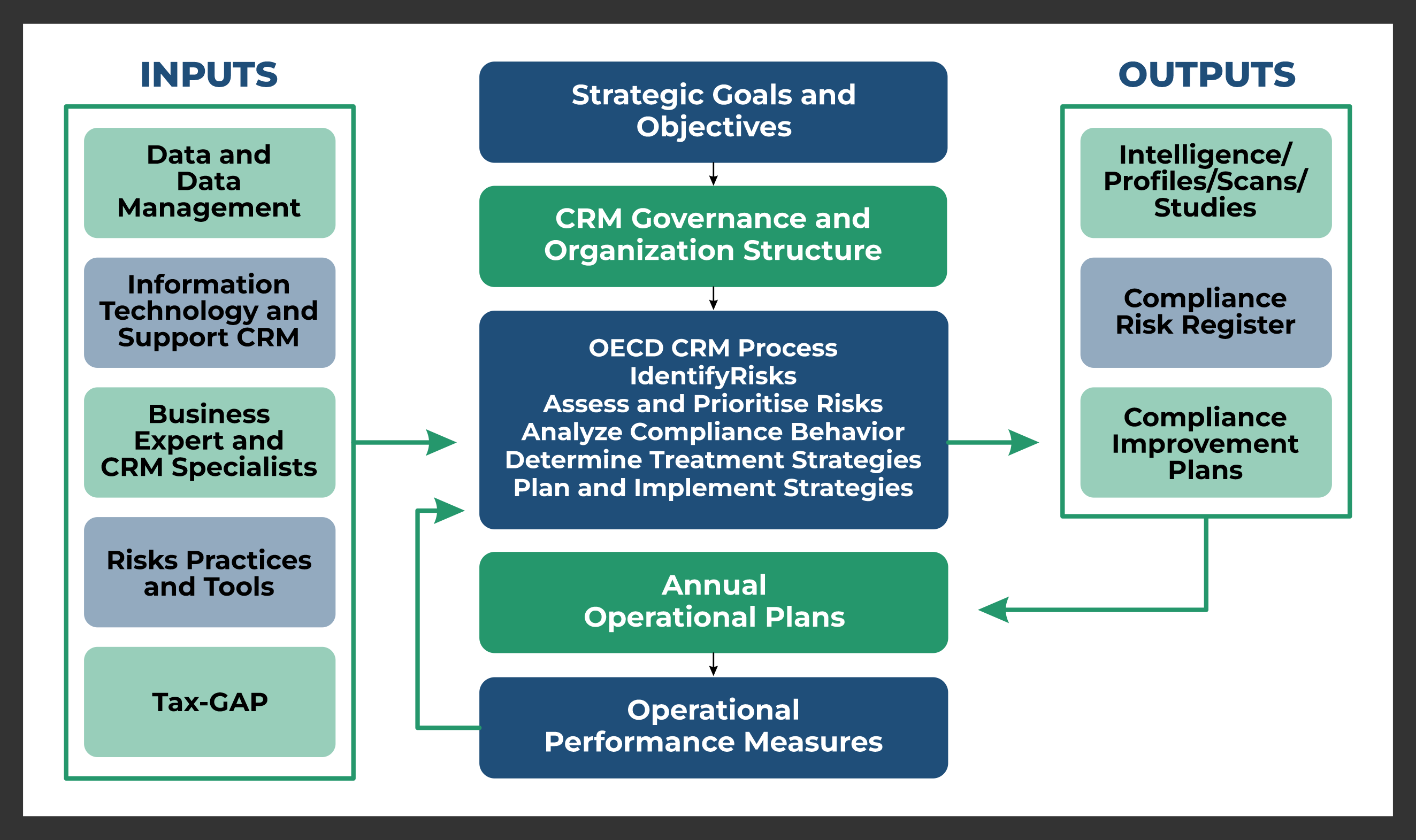
OECD's CRM Framework
OECD's CRM Framework
By modernising audit selection and embedding risk management in tax administration, the reform not only strengthens domestic revenue mobilisation but also aligns with international development goals around fiscal governance, digital public sector reform, and sustainable state capacity.



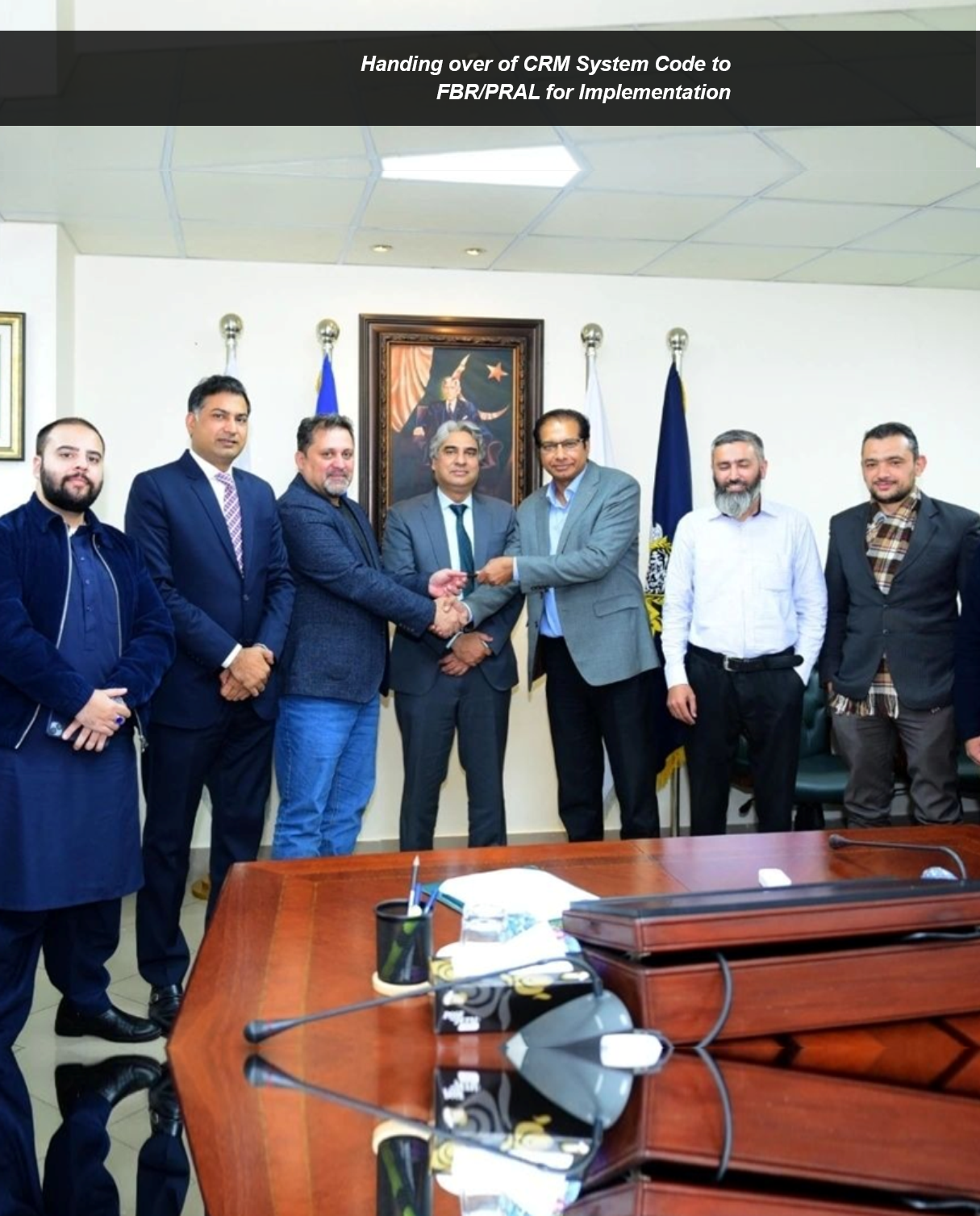


REMIT’s Support
Making Tax Audits Smarter, Faster, and Fairer


Recognising the structural limitations in Pakistan’s tax audit system and the need for a strategic shift to data-driven enforcement, the FBR sought REMIT’s technical leadership to design, pilot, and operationalise a CRM system. The objective was ambitious: to replace fragmented, discretionary audits with a unified, data-driven risk engine capable of detecting non-compliance at scale. REMIT responded by deploying deep technical expertise, advanced data science tools, and strategic policy engagement.
REMIT's support covered seven interlinked workstreams critical to institutionalising Pakistan’s CRM system:
- Risk Engine Development and Domain Screening: REMIT developed and deployed a machine learning–based CRM Risk Engine focused on income and sales tax records, initially piloted for Tax Years 2021 and 2022. Flagged high-risk cases were validated by FBR’s audit teams, forming the institution’s first national Risk Register.
- Data Governance Framework: REMIT drafted and secured approval for FBR’s first Data Governance and Security Policy laying the foundation for trusted, large-scale analytics across FBR’s 15-petabyte infrastructure.
- Third-Party Data Integration: Comprehensive diagnostic was conducted of taxpayer data with third parties in terms of quality, willingness to share and technical hurdles. Agreements were facilitated with AGPR, enabling cross-verification of taxpayer declarations and the pre-filling of returns using government payroll and utility data.
- Pilot Testing and National Rollout: Following successful pilots, REMIT supported national dashboard deployment, trained 160+ officers, and developed visual tools for risk segmentation. CRM comprehension scores in training sessions averaged 63%, with several regions exceeding 90%.
- Behavioural Nudging: REMIT helped FBR design and launch several data informed nudging campaigns at its own and through World Bank support using CRM insights.
- CRM-Linked Digital Tools(In Progress): REMIT backed the redesign of the FBR website and the development of an AI chatbot, streamlining taxpayer guidance and reducing compliance friction.These tools are under development and will enhance CRM usability once launched.
- Institutional Structuring: REMIT advised on internal change management, recommended dedicated CRM staffing, and initiated a national Institutional Risk Assessment to flag sustainability risks and bottlenecks.
Together, these efforts shifted FBR from reactive enforcement to intelligence-led compliance management strengthening audit impact, improving governance, and aligning tax operations with global good practice.
Tangible Results and Systemic Shifts: Smarter Audits, Stronger Compliance, and a Digital Leap in Tax Administration
REMIT’s technical and strategic engagement with FBR has yielded measurable changes in how Pakistan administers tax compliance, replacing manual, inconsistent audit selection with a modern, risk-informed system rooted in data intelligence and behavioural insights.
- Audit Selection Transformed Nationwide: The CRM Risk Engine is now operational across key FBR offices, using advance data analytics to flag high-risk taxpayers based on real-time data anomalies. For the first time, tax offices are guided by risk scores rather than discretionary triggers, enabling targeted audits, higher deterrence, and more efficient use of audit resources.
- First National Risk Register and Dashboards in Use: Pakistan now maintains a digital Risk Register to track and manage compliance threats, supported by visual dashboards that enable regional and sectoral risk profiling. These tools are actively used by FBR’s audit teams to plan and prioritise enforcement.
- Data Security and Governance Institutionalised: The approval of FBR’s first-ever Data Governance and Security Framework, recognised in the 2024 Economic Survey has introduced formal safeguards and ethical data usage standards, enhancing trust in how tax data is stored, processed, and applied.
- Institutional Uptake and User Readiness: With more than 160 officers trained, CRM has transitioned from a pilot to a routine tool across FBR. Internal comprehension assessments showed an average system understanding of 63%, with some zones exceeding 90% prompting FBR leadership to initiate a nationwide CRM performance review.
- Sharp Increase in Tax Filing Rates: Behaviourally informed SMS and email nudges (shaped by CRM insights) helped raise tax return filings from 4.1 million (FY2022) to 6.6 million (FY2023), a nearly 61% increase in a single year. A single email campaign prompted 33,000 filings in one week, underscoring the CRM system’s capacity to trigger rapid behavioural shifts.
- Enhanced Digital Interface for Compliance(In Progress): The redesigned FBR website and an AI-powered chatbot will reduce information barriers and makeit easier for citizens to understand and act on compliance requirements, thereby reinforcing CRM’s preventive and facilitative goals.
- Credibility with International Partners Strengthened: The operationalisation of CRM contributed to Pakistan meeting a key structural benchmark under the IMF’s EEF. The reform is now expanding to cover non-corporate taxpayers and integrate new data sources signalling continuity and scalability.
The Compliance Risk Management system is a foundational shift in how Pakistan enforces tax compliance, powered by data, aligned with global standards, and built for lasting institutional impact.
Voices from the System
Lasting Impact, Strong Ownership, and International Endorsement
The CRM reform is widely regarded within FBR and among international partners as a technically grounded and institutionally significant shift in how Pakistan enforces tax compliance. What began as a structural benchmark under IMF commitments has evolved into an operationally embedded system, driving audit reform, improving taxpayer risk profiling, and strengthening institutional trust.
The CRM reform was also acknowledged at the highest political level. Pakistan’s Federal Finance Minister, in his Budget Speech to Parliament in June 2025, explicitly referenced CRM-related initiatives including data integration, AI-driven audits, fraud analytics, and efforts to identify non-filers, highlighting the reform’s systemic importance and contribution to improved revenue mobilisation.


“Through data integration, we identified 3 million high-value individuals; 900,000 were non-filers, and recovery actions have been initiated. Using fraud analytics, we blocked fake refund claims of over PKR 9.8 billion. CRM systems powered by artificial intelligence have helped strengthen audit targeting across more than 200 parameters.”
Finance Minister’s Budget Speech, June 2025
“This is a foundational shift. We’ve moved from manual, instinct-driven audits to a rules-based system grounded in data. The real value of REMIT’s work is that it helped institutionalise this shift—without adding complexity or cost to our core systems.”
Senior official from FBR’s Reform Wing during internal briefings
“IT Wing acknowledges the assistance provided by REMIT in drafting the data governance policy for FBR."
Zain-ul-Abidin Sahi, Chief (Systems), IT Wing, FBR
(In a formal communication, FBR’s IT Wing acknowledged REMIT’s support in establishing the data backbone required to sustain CRM)
The reform has also received formal recognition from international development partners.
The IMF’s Country Report No. 2025/109 (May 2025) acknowledged Pakistan’s successful establishment of CRM systems at the Large Taxpayer Offices in Islamabad, Karachi, and Lahore by December 2024, noting that these systems “adhere to international best practices.”
“Trained officers described the dashboards as intuitive and meaningful helping shift audits from routine checklists to tools for strategic enforcement"
CRM validation feedback, 2024
Similarly, the Economic Survey of Pakistan 2024 identified the approval of the Data Governance and Security Framework developed under REMIT support as a key milestone in Pakistan’s digital transformation of public financial management.
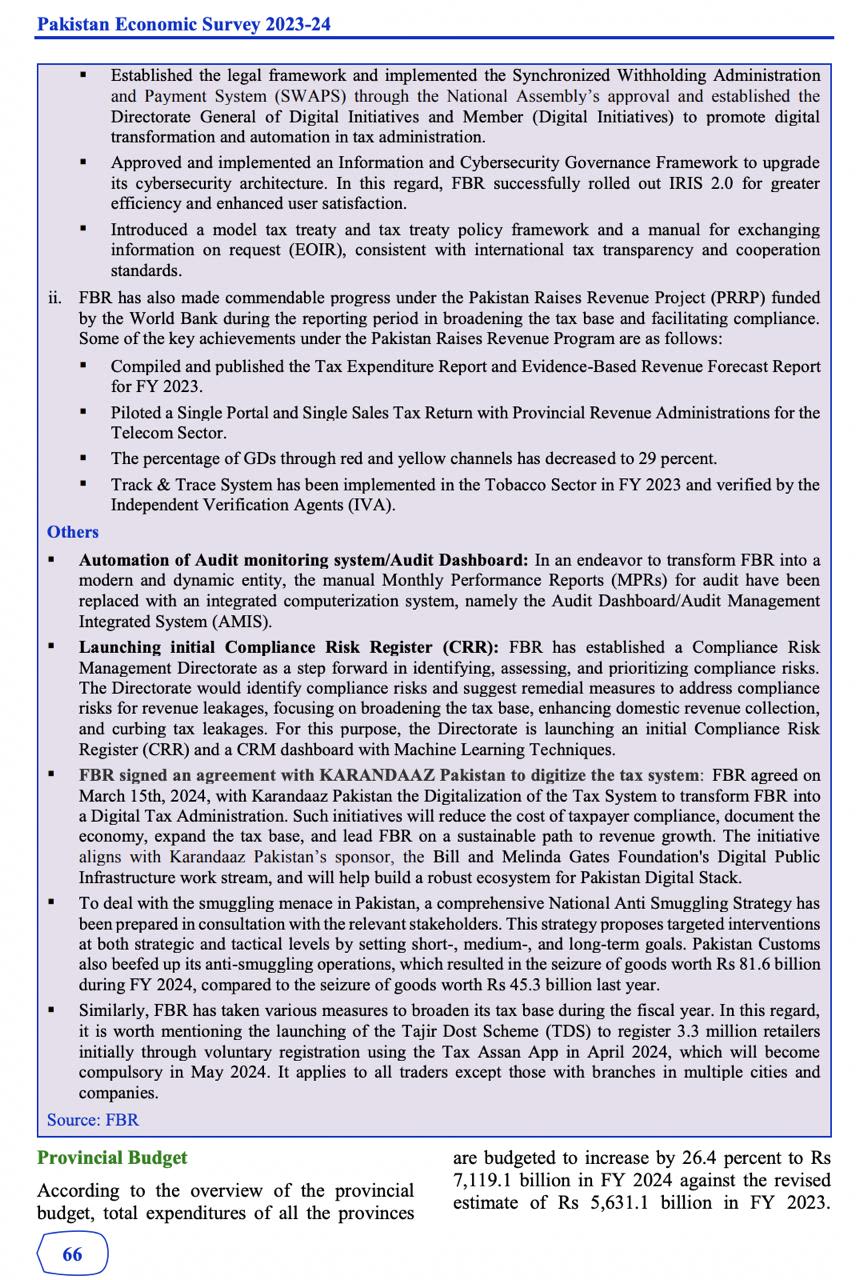
- Launching initial Compliance Risk Register (CRR): FBR has established a Compliance Risk Management Directorate as a step forward in identifyig, assessing, and prioritizing compliance risks. The Directorate would identify compliance risks and suggest remedial measures to address compliance risks for revenue leakages, focusing on broadening the tax base, enhancing domestic revenue collection, and curbing tax leakages. For this purpose, the Directorate is launching an initial Compliance Risk Register (CRR) and a CRM dashboard with Machine Learning Techniques.
Recognition of CRM Reform in the Pakistan Economic Survey 2023–24

Taken together, these perspectives demonstrate that CRM is no longer a pilot or proof of concept. It is a system-wide shift backed by institutional ownership, international credibility, and a strong foundation for sustainable, intelligence-led tax administration.


What’s Ahead
Projected Outcomes of CRM Reform
The CRM reform is not just about compliance today—it is designed to yield measurable institutional and taxpayer benefits in the years ahead. Based on FBR and REMIT estimates, the following outcomes are anticipated:
- 30–40% Improvement in Tax Compliance: As CRM scales nationwide, risk-informed enforcement is expected to significantly raise compliance, particularly among previously non-filing and under-reporting taxpayers.
- 15–20% Reduction in Administrative Costs: Automated risk assessments and digital case prioritisation are expected to reduce audit workloads, streamline review processes, and lower the cost of enforcement.
- Significant reduction of Pakistan's estimate compliance gap: More precise audit targeting and better data integration will help recover revenue leakages gradually narrowing the country’s large tax compliance gap.
- Elimination of Over 250,000 In-Person Visits: Through the redesigned FBR website, AI chatbot, and data-backed nudging, CRM is expected to significantly reduce taxpayers’ reliance on physical office visits for routine matters.
- Facilitation of 9.3 Million Taxpayers: With expanded digital tools and streamlined services, CRM aims to support a taxpayer base that is expected to grow to over 9 million by 2025 offering a more predictable, accessible, and fairer tax experience.
- Expanded Inter-Agency Data Verification: CRM is underpinned by FBR’s integration of over multiple public data sources including NADRA, AGPR, DISCOs, and property registries enabling more accurate taxpayer profiling and reducing opportunities for tax evasion.
- Sustainable, Rules-Based Enforcement Culture: CRM is institutionalising a shift from ad hoc enforcement to a rules-based compliance system, grounded in data governance, machine learning, and predictive analytics setting the stage for long-term reform sustainability.
Overcoming Challenges:
Reforming from Within
Rolling out CRM meant changing how FBR thinks, works, and uses data. Several challenges emerged along the way.
- Unclear Departmental Roles: Key functions like registration and taxpayer broadening were outside the Audit Wing’s control, creating confusion on CRM ownership. REMIT helped clarify mandates and pushed for a dedicated CRM team.
- Fragmented Audit Practices: Audit procedures differed across offices, making risk-based targeting inconsistent. REMIT supported standardised dashboards and officer training to improve uniformity.
- Resistance to Data Sharing: Internal hesitation and siloed systems made inter-agency data exchange difficult. REMIT brokered collaboration with NADRA, AGPR, and others to unlock key datasets.
- Limited Technical Capacity: Many FBR teams lacked the skills to fully use CRM tools. REMIT filled the gap through hands-on training and embedded support.
- Sustainability Risks: Without dedicated resources, CRM risked becoming a one-off project. REMIT initiated an institutional risk assessment and advocated for long-term integration within FBR.
Embedding CRM Across Pakistan’s Tax System
With CRM now operational across key FBR offices, the focus shifts to expanding coverage, strengthening institutional capacity, and embedding CRM into the core functions of tax administration.
- Roll Out Non-Corporate CRM Nationwide: Expand the system to cover non-corporate taxpayersto enable risk-based enforcement across all major tax streams.
- Strengthen CRM Staffing and Structure: Strengthen CRM Wing within FBR, with more defined roles, technical expertise, and integration into the organisational structure to sustain reform momentum.
- Scale Up Capacity Building: Extend CRM training to the wider FBR workforce particularly in Regional Tax Offices to ensure consistent application of risk dashboards and analytical tools.
- Monitor Use and Impact: Launch a system-wide review to track how CRM tools are being used, assess behavioural and operational impact, and fine-tune system design based on user feedback.
IMPACT NUMBERS
1.5 BILLION PKR
Lost revenue recovered (till date)
34 BILLION PKR
Projected to be recovered in one year
A Foundational Shift in Tax Governance
The CRM system marks a paradigm shift in how Pakistan enforces tax compliance: smarter, fairer, and rooted in data. By replacing discretionary audits with risk-informed enforcement, CRM is helping FBR move from reactive administration to proactive, intelligence-led governance.
It is a reform built inside the system owned by FBR, guided by international good practice, and shaped through hands-on, embedded support from REMIT. The journey ahead will demand persistence, but the foundations are in place: structured data, institutional buy-in, and a clear direction for sustainable, rules-based tax administration.


 Built with Shorthand